.svg)
The history of marriage records in Belarus highlights their significance as a vital genealogical instrument, offering rich insights into the country's familial and social fabric. From the medieval period, when the Orthodox and Catholic churches recorded marriages, baptisms, and deaths, to the formalized civil registration systems established under Russian and Soviet rule, these records have evolved significantly. The transition to state-controlled record-keeping and subsequent modernization efforts, including digitization, have made these records more accessible and reliable.
However, the historical complexities of Belarus, including periods of foreign rule, war, and shifting borders, pose unique challenges in locating and accessing these records. Researchers must navigate a fragmented archival landscape, with documents dispersed across various national, regional, and international archives.
Research your ancestors on MyHeritage
History of Marriage Records in BelarusHistory of Marriage Records in Belarus
Early HistoryEarly History
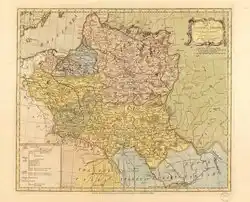
In medieval Belarus, which was part of the Grand Duchy of Lithuania, marriage records were typically kept by the church. Both the Orthodox and Catholic churches played a central role in recording marriages, baptisms, and deaths. These records were primarily ecclesiastical and lacked standardization.
During the period when Belarus was part of the Polish-Lithuanian Commonwealth (1569-1795), the responsibility for recording marriages remained with the church. The Catholic Church had a more formalized system for maintaining such records, which introduced a level of consistency.
Russian EmpireRussian Empire
Following the partitions of Poland in the late 18th century, Belarus became part of the Russian Empire. Russian authorities implemented their own administrative practices, including the recording of vital events. However, the church continued to play a significant role in recording marriages. In the 19th century, the Russian Empire began establishing civil registry offices to maintain records of births, marriages, and deaths. These offices aimed to provide a more secular and standardized system for recording vital events, although the transition was gradual and the church still maintained parallel records.
Soviet EraSoviet Era
After the October Revolution in 1917 and the subsequent formation of the Soviet Union, Belarus became one of the Soviet republics. The new Soviet government sought to secularize the state and reduce the influence of the church.
In 1918, the Soviet government established civil registry offices known as ZAGS (Запись актов гражданского состояния, or Civil Status Acts Registration) to oversee the registration of births, marriages, and deaths. This marked a significant shift from church-based to state-controlled record-keeping. The Soviet system standardized marriage records across the republics, ensuring uniformity and accessibility. The records included essential details such as the names of the spouses, the date and place of marriage, and information about witnesses.
Post-Soviet PeriodPost-Soviet Period
Following the dissolution of the Soviet Union in 1991, Belarus declared independence. The country retained the Soviet-era civil registration system, with ZAGS offices continuing to manage marriage records. In the years following independence, Belarus undertook efforts to modernize its civil registration system. This included initiatives to digitize records, improve record-keeping practices, and enhance public access to vital records.
Belarus introduced legal reforms to adapt the civil registration system to the new social and political realities. The Belarusian Family Code outlines the legal requirements for marriage and the responsibilities of ZAGS offices. In recent years, Belarus has focused on digitizing marriage records and other vital records. This effort aims to improve the efficiency of record-keeping, enhance the security of records, and make it easier for individuals to access their records. Modern regulations balance public access to marriage records with privacy concerns. Generally, only the individuals named in the records, their legal representatives, or close family members can access marriage records. Researchers may need special permission to access these records for legitimate purposes.

Archival records in BelarusArchival records in Belarus
.jpg)
There are many difficulties in searching vital records in Belarus. Even after the introduction of a centralized registration system, it is very challenging to restore many archives that were lost or burned during the war. Additionally, in the territory of Belarus, which belonged to different states at various times, several actively functioning religious denominations maintained all records of marriages, births, and deaths before Soviet rule.
Metric books were kept in church parishes separately for each denomination: Orthodox (about 70 percent of the population of Belarus), Catholics and Jews (15-20 percent each), and Protestants—Evangelicals, Lutherans (a very small part of the population). They recorded births, marriages, and deaths of all parishioners. For some Orthodox and Catholic parishes, a small number of confession lists have been preserved, which name all parishioners for a certain year, as well as marriage investigations (information about families getting married). Based on the annual copies of metric records provided by the parishes, summary books were created for the territory of the district or its part (deanery, decanate). Historical archives of Belarus have preserved both the books of individual parishes and some of the summary books.[1]
Another feature of the annexed territories was the presence of a large number of Catholic and Greek Catholic churches, monasteries, religious institutions, and believers (up to 95-97% of the entire population). Mixed marriages were characteristic of this territory, and children born in them could be baptized alternately in Catholicism and Orthodoxy. The maintenance of metric books had a number of features and, in some respects, differed significantly from Orthodox practices. For example, Greek Catholics were allowed to marry: grooms at 14, brides at 12 years old. The books were kept in a single copy (later, in the mid-19th century, copies of the surviving ones were made).
The majority of Orthodox churches in the Republic of Belarus from 1596 to the 1830s were Greek Catholic (Uniate). Therefore, metric books for churches from the 18th century should be sought in the holdings of Uniate metropolises, and sometimes also Catholic ones. They may be stored in the archives and libraries of Minsk, Grodno, Moscow, St. Petersburg, Vilnius, Warsaw, Lviv, and Kyiv.[2]
Since Western Belarus was part of Poland until 1939, civil registry offices (ZAGS) in this territory began operating for the first time in 1940, and then again after the liberation of the republic from the Nazis in 1944. At the same time, in the BSSR, where ZAGS offices began to be established as early as 1919, the preservation of documents leaves much to be desired due to World War II. For example, the ZAGS offices in the Krasnopolie, Cherykaw, and Chavusy districts of the Mogilev region were completely burned down during the fighting. The best preservation of documents can be boasted by the offices in Smolevichi, Uzda in the Minsk region, where most of the records were saved during WWII. The oldest documents are found in the Dubrovno ZAGS in the Vitebsk region (1921), the Rogachev, Rechitsa ZAGS in the Gomel region (1920, 1926), the Lyuban, Krupki, Uzda, Smolevichi ZAGS in the Minsk region (1920).
Various collections of ZAGS documents, including those transferred by these institutions at different times, restored documents, draft records, etc., are stored in the republican, regional, and zonal archives.
The National Historical Archive of Belarus stores documents for the territories of the Minsk, Vitebsk, and Mogilev provinces for the period up to 1917 (as well as selectively metric books for the Vileyka and Disna districts of the Vilna province for the late 19th - first quarter of the 20th centuries). The National Historical Archive of Belarus in Grodno stores documents for the territory of the Grodno province for the period up to 1917 (including the Brest, Kobrin, and Pruzhany districts). The administrative boundaries of the provinces of the Russian Empire and the modern regions of the Republic of Belarus differ significantly. The main collection of documents for the territory of the Vilna province is kept in the State Historical Archive of Lithuania (Lietuvos valstybės istorijos archyvas). A large collection of documents on the genealogy of Belarusian lands (for example, metric books of the 18th century for the territory that at the end of that century became part of the Vileyka, Lida, Minsk, Ashmyany, Pinsk, Pruzhany, Rechytsa, Slonim, and Slutsk districts of the Vilna, Grodno, and Minsk provinces) is kept in the Russian State Historical Archive.[3]
See alsoSee also
Explore more about marriage records in BelarusExplore more about marriage records in Belarus
- Belarus Vital records at MyHeritage
- Helen Mirren’s Surprising Link to Golda Meir Uncovered by MyHeritage at MyHeritage Blog
References
- ↑ "Методические рекомендации по проведению генеалогических исследований в Национальном историческом архиве Беларуси | Национальный исторический архив Беларуси". niab.by. Retrieved 2024-08-01.
- ↑ "Как искать предков в Республике Беларусь? | Familio.Media" (in русский). 2021-10-11. Retrieved 2024-08-01.
- ↑ "Методические рекомендации по проведению генеалогических исследований в Национальном историческом архиве Беларуси | Национальный исторический архив Беларуси". niab.by. Retrieved 2024-08-01.