The oldest HBCU in the United States, Cheyney University of Pennsylvania was established as the Institute for Colored Youth in 1837.
The term Historically Black Colleges and Universities (HBCU)[1] is new as compared to the rich history of institutions for higher learning established for the free Negro during the period of slavery[2] in America and later for freedmen. These institutes for higher learning grew out of the American reality that non-white people were systematically denied access to education at predominantly white institutions in the United States. These new institutions emerged to provide the Negro the most basic of human rights, access to a full education. This important part of American history is often overlooked in classrooms and underrepresented in mainstream media.
When Did the Term Become PopularWhen Did the Term Become Popular
The term was formally coined and defined in 1965 as part of the Higher Education Act, and specifically under Title III.[3] According to this legislation, an HBCU is an accredited institution of higher education established before 1964, with the principal mission of strengthening and supporting institutions that serve historically underserved populations, particularly those with limited financial resources.
Traces its beginnings to Myrtilla Miner and the Normal School for Colored Girls[9]
Also known as the Miner Normal School
Part of the District of Columbia School District, after the Brown v. Board of Education[10] decision by the U.S. Supreme Court, the school merged with an all-white female institution to take on its current name
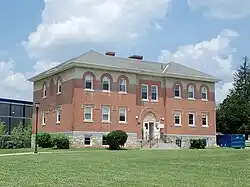
Lincoln University of Chester County, PennsylvaniaLincoln University of Chester County, Pennsylvania
Building at Lincoln University.Chartered in April 1854 as Ashmun Institute for males of African descent[11]
Founded by John Miller Dickey, and his wife, Sarah Emlen Cresson
The Miller and Dickey families had a long history of helping the poor, supporting education and the temperance movement based in their strong Presbyterian religion
In 1866 renamed Lincoln University for President Abraham Lincoln
History tied to Daniel A. Payne[14] a bishop in the African Methodist Episcopal church[15]
In SummaryIn Summary
With the help of those who believed education should be accessible to all, these early institutions can be traced to free Negroes, philanthropists and religious organizations. Today, there are over 100 HBCUs across the U.S., each with its own legacy of excellence and resilience. Some of them fall under the category of land grant colleges and universities[16]. Though these institutions of higher learning were established for Black people, they do not discriminate, and anyone may register and attend.
Explore more about Higher Learning and Historically Black Colleges in AmericaExplore more about Higher Learning and Historically Black Colleges in America
Wing, Kelisa. Racial Justice in America. Excellence and Achievement. Historically Black Colleges and Universities. Cherry Lake Publishing Group. Ann Arbor, Michigan, 2022.
.jpg)

.jpg)