
From the 17th century to the end of the 19th century, Finnish servants (Swedish: tjänstefolk), consisting mainly of maids, farmhands, and certain crofters, formed the economic backbone of the agrarian society and its largest single demographic group. For a genealogist, understanding this group is vital, as the majority of Finns belonged to the non-estate, landless population whose lives and movements were dictated by strict laws and established customs. Their history is a story of hard labor, limited rights, and constant dependence on their masters.
Research your ancestors on MyHeritage
Legal status of Finnish servantsLegal status of Finnish servants
Servants belonged to the so-called non-estate population (säädytön),[1] which comprised up to 70 percent of the people. This group included everyone who did not own land or belong to the nobility, clergy, or burghers. As members of the non-estate population, they had no political rights or the privileges tied to the estates. Their entire social and legal identity was built upon the master-servant relationship. They were subordinate to their masters and occupied the lowest rungs of the social hierarchy.
The cornerstone of the system was the Obligation to Serve (palveluspakko; Swedish: tjänstetvång), a law enacted in Sweden in 1664 and enforced in Finland until 1883. The law required every landless and profession-less person to accept a service position on a tax-paying farm. Through this law, the state sought to prevent vagrancy (lösdriveri) and guarantee a continuous labor supply for agriculture. In genealogy, this means that ancestors are very likely to be found in the records of a farm, even if they were not part of the owner's family.
The relationship between master and servant was governed by the Servant Regulation (palkollissääntö; Swedish: legostadgan), most recently the decree of 1865. It granted the master extensive, patriarchal authority (isäntävalta). The master had the right to corporally punish servants under the age of 18 and to supervise their lives. Although servants had limited legal protection and could take their masters to court for cruelty or unpaid wages, their position was in practice extremely weak. Court records from the 18th and 19th centuries can therefore be a valuable, albeit fragmented, source for researching these relationships and conflicts.

Groups of of Finnish servants and their dutiesGroups of of Finnish servants and their duties
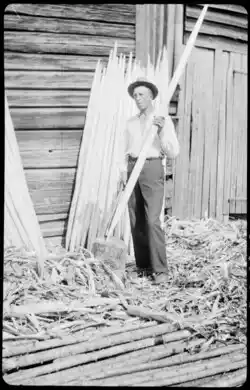
Although servants are often bundled together, it is important for a genealogist to distinguish between the different groups, as their living conditions and family situations differed significantly.
Renki (Farmhand)Renki (Farmhand)
The renki was the male general laborer of the farm, whose work was physically very demanding. His duties followed the annual cycle of agriculture, from plowing and sowing to harvesting and winter forestry work. Farmhands were skilled workers who knew how to handle horses and tools. They were typically unmarried, lived and ate in the master's house, and received their wages primarily as full upkeep, which included lodging, food, and clothing. The small cash wage was secondary.
Piika (Maid)Piika (Maid)
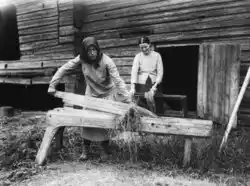
The piika (piga) was the female counterpart to the farmhand, and her workload was at least as heavy. She was responsible for household chores such as cooking, cleaning, and textile production, but in addition, she performed heavy outdoor work, especially animal husbandry, and participated in fieldwork alongside the men. Girls usually became maids after their confirmation, around the age of 15, and their careers often ended with marriage. Like farmhands, maids lived in the house and received their wages as upkeep.
Muonamies (In-kind Crofter)Muonamies (In-kind Crofter)
The muonamies represented an intermediate form between a farmhand and a more independent worker. Unlike the unmarried farmhand living in the main house, the muonamies was typically married and lived with his family in his own cottage on the master's land. His wages did not cover full upkeep but consisted mainly of payments in kind, or muona (e.g., grain, milk, potatoes). The muonamies worked day labor for the farm as needed, often during the busiest seasons. His position was more independent than that of a farmhand but at the same time more economically precarious. For a genealogist, the status of a muonamies is an important clue: it indicates that the ancestor was married and had established his own, albeit rented, household.
The employment relationship and annual cycle of of Finnish servantsThe employment relationship and annual cycle of of Finnish servants
The lives of servants were paced by a strict annual cycle, which is essential information when tracking the movements of ancestors.
- Pestuumarkkinat (Hiring Fairs): Servants were hired once a year at hiring fairs held in the autumn, which were the central meeting place for masters and the labor force.
- Vuosisopimus (One-Year Contract): The employment relationship was usually established for one year at a time, often verbally. To seal the agreement, the master paid a small advance, the pestiraha (hiring money). The work year typically began at the beginning of November. This meant that a family could move to a new location every year.
- Kissaviikot (Cat Weeks): A 1–2 week leave period, known as the kissaviikot, fell between the old and new service years. During this time, people visited relatives and friends before moving to their new place of service.
This annual cycle created a constantly mobile working class. The reputation of both the servant and the master was important social capital; a good farmhand easily found a position, and a fair master had many applicants.
Living conditions of of Finnish servantsLiving conditions of of Finnish servants
Life for the servant class was harsh. Living conditions were modest, often in shared rooms or outbuildings. The diet was simple and based on grain products, but in a well-managed house, there was usually enough food for the heavy work. Clothing, known as parseelit, was a significant part of the wages.
Social mobility was extremely limited. The most common direction was downward, as sons of farmers who did not inherit land became farmhands. Upward mobility was rare. In exceptional cases, a diligent farmhand might marry the farmer's daughter or a widow, or save enough money to establish his own croft. However, marriages were typically contracted within one's own social class.
The collapse of the system of of Finnish servantsThe collapse of the system of of Finnish servants
In the late 19th century, the old system began to break down. The reasons included rapid population growth, which created a rural "surplus population," and new opportunities arising from urbanization and industrialization. The greatest force for change, however, was the mass emigration to North America starting in the 1870s. America offered not only a better livelihood but also an escape from the hierarchy of the estate society and the obligation to serve.
As real alternatives became available to the landless population, the foundation of the system crumbled. The Obligation to Serve was abolished in 1883. This transition from a patriarchal service relationship to free wage labor laid the foundation for a modern class-based society. For the genealogist, this period is often visible as ancestors disappearing from their home regions and reappearing in city factories or on passenger lists for America. The former servant class became a free, mobile workforce.
See alsoSee also
Explore more about Finnish servantsExplore more about Finnish servants
- Finland - Collection Catalog at MyHeritage
- Finns – Finnish not required; Internet is! webinar at Legacy Family Webinars
References
- ↑ Roman, Raluca Bianca; Stadius, Peter; Stark, Eija. Counter-Readings on Finnish Nationhood: Minority Strategies and the Making of the Nation. Journal of Finnish Studies