
Dutch migration to New York represents one of the most significant early movements of Europeans to the "New World" -- what was to eventually become the United States of America. Its New York legacy includes physical landmarks, place names and architectural styles. But more importantly this migration shaped the future development of the whole country. Beginning in 1624, with the establishment of "New Netherland", Dutch settlers laid the foundation for a uniquely diverse and tolerant society that would influence American political development, its social fabric and culture for centuries to come.
The Dutch colonial period established New York as a multicultural commercial hub where diverse peoples could coexist and prosper—a model that would attract millions of immigrants and help build the United States into a global power. From the purchase of Manhattan from the traditional owners to the emergence of a bustling modern metropolis, the Dutch influence remains woven into the fabric of New York's identity and America's character[1].
Research your ancestors on MyHeritage
Early Dutch settlement and New AmsterdamEarly Dutch settlement and New Amsterdam
.jpg)
The Dutch West India Company established the first permanent European settlement on Manhattan Island in 1624, initially settling 30 families on Governors Island before moving to the southern tip of Manhattan to build Fort Amsterdam. The colony was named New Netherland, with New Amsterdam as its capital. It extended from modern-day Connecticut to Delaware. By 1625 Dutch traders had moved their post from Governors Island to Manhattan proper, constructing a fort to protect their burgeoning fur trading operations[2].
Peter Minuit, appointed as the first director-general of New Netherland in 1626, orchestrated the famous purchase of Manhattan Island from the Lenape Native Americans for 60 guilders worth of trade goods—approximately US$1,143 in 2025 dollars. This transaction, often described as "$24 worth of trinkets", in fact included European goods highly useful to the indigenous population. These included cloth, metal tools and agricultural implements[3]. Still, it represented quite a bargain!
Under subsequent leadership, particularly Peter Stuyvesant (see below for more details on him), New Amsterdam developed into a thriving commercial centre. By 1664 Stuyvesant had transformed the settlement from a struggling outpost of fewer than 300 armed men into a prosperous port city of approximately 2,500 residents. His administration focused on urban planning, establishing markets and regulating trade. It also significantly expanded the colony's involvement in the Atlantic slave trade[4].

Characteristics of Dutch Colonial surnamesCharacteristics of Dutch Colonial surnames
Many Dutch surnames in colonial New York followed specific patterns that reflected their homeland origins and cultural significance:
- Van/Van der/Van den Prefixes: These particles meaning "from" or "of the" were extremely common, indicating geographic origins in the Netherlands. Examples include FarkasVan Rensselaer ("from Rensselaer"), Van Cortlandt ("from Cortlandt") and Vanderbilt ("from the town of der Billt")[5].
- Patronymic Surnames: Names ending in -sen or -szen indicate "son of". Examples include Hendricksen ("son of Hendrick") and Jansen ("son of Jan"). These naming conventions were standard in Dutch culture before the Napoleonic era mandated fixed surnames in 1811.
- Occupational and Geographic Names: Many surnames reflected trades or geographic features, such as De Bakker ("the baker"), Ten Broeck ("at the brook"), or Beekman ("man of the brook").
Dutch surnames important in New York historyDutch surnames important in New York history
The Dutch colonial period in New York produced several influential families whose surnames became synonymous with power, wealth and political influence in early American history. These families established the foundation for New York's aristocratic society. Among the most notable surnames are:
- Van Rensselaer: The Van Rensselaer family represents perhaps the most successful Dutch colonial enterprise in North America. Kiliaen van Rensselaer (1586-1643), an Amsterdam diamond merchant and member of the Dutch West India Company, established the patroonship (a feudal landholding granted by the Dutch West India Company to wealthy individuals ("patroons") to encourage settlement of New Netherland in the 17th century) of Rensselaerswyck in 1629. This massive land grant, covering nearly one million acres around present-day Albany, was the only patroonship to survive the transition from Dutch to English rule and remained intact for over two centuries.
- Stuyvesant: Petrus (Peter) Stuyvesant (c. 1612-1672) served as the last and most influential Dutch Director-General of New Netherland from 1647 to 1664. He transformed New Amsterdam from a disorderly frontier town into a more structured colonial capital. Despite (or perhaps because of) his authoritarian rule, he oversaw the colony's growth from 2,000 to 8,000 inhabitants and established crucial infrastructure including paved roads, fire safety measures and defined property lines.
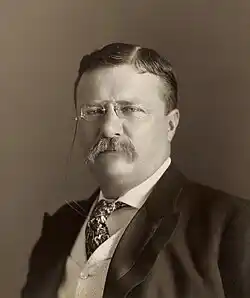
President Theodore Roosevelt - Roosevelt: The Roosevelt family traces its American origins to Claes Maartenszen van Rosenvelt (c. 1626-1679), who arrived in New Amsterdam between 1638 and 1649. The family name, meaning "rose field" in Dutch, evolved through various spellings before settling on Roosevelt. Claes purchased a farm comprising 24 morgens (about 50 acres) in what is now Midtown Manhattan, including the present site of the Empire State Building. The Roosevelt legacy produced two U.S. presidents: Theodore Roosevelt (1901-1909) and his fifth cousin, Franklin D. Roosevelt (1933-1945).
- Van Cortlandt: Oloff Stevense Van Cortlandt (c. 1615-1684) arrived in New Amsterdam in 1637 as a Dutch West India Company officer and quickly rose to prominence as a merchant and politician. His son Stephanus Van Cortlandt became the first native-born mayor of New York and received a royal patent in 1697 for the 86,000-acre Van Cortlandt Manor in Westchester County. The Van Cortlandt family intermarried extensively with other prominent Dutch families, creating a network that included the Van Rensselaers, Schuylers, Livingstons and others. This interconnected web of Dutch aristocracy controlled vast tracts of land and dominated colonial New York politics.


- Schuyler: The Schuyler family established itself as one of New York's most prominent political dynasties. Philip Pieterse Schuyler emigrated from Amsterdam around 1650 and settled in Beverwyck (Albany), marrying into the Van Rensselaer family. The family's influence peaked with Philip John Schuyler (1733-1804), a Revolutionary War general and U.S. Senator who married Catharine van Rensselaer. The Schuyler daughters gained renewed fame through the musical "Hamilton," particularly Elizabeth Schuyler Hamilton, who married Alexander Hamilton at the family mansion in Albany in 1780. The family's extensive connections linked them to the Roosevelts, Bayards, and other influential American dynasties.
- Vanderbilt: The Vanderbilt name is deeply associated with New York's economic and architectural history, reflecting both Dutch colonial roots and the extravagant "gilded age" of the United States's history (roughly the second half of the 19th century, post the Civil War). Its association with New York began with Jan Aertszoon (also spelled Aertson). Cornelius Vanderbilt (1794–1877), a descendant of Jan Aertszoon, was born on Staten Island, New York. Starting from modest means he built a vast shipping and railroad empire, earning the nickname "Commodore." Cornelius's son William Henry Vanderbilt further expanded the fortune, making the Vanderbilts the richest family in America by the late 19th century.
- Other Significant Dutch Colonial Surnames include Ten Broeck, Livingston, Beekman, De Peyster, Philipse, Van Dyke and Van Buren.
Cultural and social impactCultural and social impact
Religious tolerance and diversityReligious tolerance and diversity

New Amsterdam became remarkably diverse for its time, attracting settlers from across Europe including Dutch, French Walloons, Germans, Scandinavians, English, Spanish, Portuguese and even Jewish refugees from Brazil. By the mid-1660s, approximately 18 different languages were spoken in the settlement, making it one of the most ethnically mixed places in North America.
While religious freedom as we understand it today was not practised New Amsterdam had a more tolerant approach than many English colonies[6]. The Dutch Reformed Church served as the public church. But unlike the British Massachusetts Bay Colony where fringe communities suffered discrimination or worse New Amsterdam allowed various religious practices to exist within families. The "Flushing Remonstrance" of 1657 was a petition in which some thirty residents of the small settlement at Flushing requested an exemption to Stuyvesant's ban on Quaker worship. It is considered a precursor to the United States Constitution's provision on freedom of religion in the Bill of Rights[7].
Economic and urban developmentEconomic and urban development
The Dutch introduced several key concepts that decisively shaped the future of American society:
- Private Land Ownership: Unlike the communal land systems of Native Americans, Dutch settlers established individual property rights that became foundational to American capitalism.
- Commercial Networks: The fur trade with indigenous peoples and transatlantic commerce created extensive trading relationships that continued long after the English takeover of New York.
- Urban Planning: Dutch settlers laid out streets, established markets, and created infrastructure including the defensive wall that gave Wall Street its name[8].
Architectural and Geographic legacyArchitectural and Geographic legacy
The Dutch influence remains visible throughout New York City in numerous place names that survive today[9]:
- Brooklyn: from Breuckelen, Netherlands
- Harlem: from Haarlem, Netherlands
- The Bronx: named after Jonas Bronck, a Swedish settler in Dutch New Netherland
- Staten Island: named after Staten Generaal, the Dutch governing body
- Broadway: from "breede wegh," meaning broad road
- Wall Street: from the Dutch defensive wall "de Walstraat"
- Flushing: from the town of Vlissingen, Netherlands which was historically known by its English name, Flushing.
Several Dutch colonial buildings survive today, representing the architectural legacy of New Netherland. Dutch architectural elements including stepped gables, brick facades, stoops, and distinctive rooflines influenced colonial and later American building styles, not just in the city but throughout Upstate New York[10]. Specific buildings with a direct link to the Dutch era include:
- Wyckoff House (1652) in Brooklyn, among the oldest structures in New York City
- Dyckman Farmhouse (1785) in Manhattan, the last remaining Dutch farmhouse
- Hendrick I. Lott House (early 1700s) in Brooklyn, featuring classic Dutch gambrel roofing
The English takeover and Dutch persistenceThe English takeover and Dutch persistence
In August 1664, four English warships under Colonel Richard Nicolls arrived in New York Harbor, demanding the colony's surrender. Rather than resist, Stuyvesant negotiated favourable terms in the Articles of Capitulation that protected Dutch settlers' property rights, religious freedom, and cultural practices. New Amsterdam was renamed New York after the Duke of York, later King James II[11].
Despite English control, Dutch cultural influence persisted. The Treaty of Breda (1667) formalised English possession while Dutch settlers remained, continuing their agricultural practices, maintaining their Reformed Church, and preserving their communities. Many Dutch families remained prominent in New York society for generations, with descendants participating in the American Revolution and Constitutional Convention.
Long-term impact of Dutch emigration to New York City on American developmentLong-term impact of Dutch emigration to New York City on American development
Political and Legal InfluencePolitical and Legal Influence
The Dutch colonial experience contributed several concepts to American political development:
- Representative Government: The Nine Men advisory council and other colonial assemblies provided early examples of colonial self-governance.
- Religious Pluralism: While far from perfect, Dutch tolerance established precedents for the religious freedom later enshrined in the First Amendment.
- Commercial Law: Dutch trading practices and commercial regulations influenced early American business law and customs[12].
Social and Cultural LegacySocial and Cultural Legacy
_1630.jpg)
The multicultural character of New Amsterdam established New York as America's premier immigrant destination. This tradition of diversity and tolerance, rooted in Dutch colonial policy, would define New York City's identity as successive waves of immigrants arrived throughout American history.
The Dutch emphasis on commerce, pragmatic governance, and cultural accommodation created a template for American urban development that prioritised economic opportunity and social mobility over rigid social hierarchies[13].
Economic foundationEconomic foundation
Dutch settlers established the economic foundations that would make New York America's commercial capital. The fur trade networks, Atlantic commerce, and early banking practices pioneered during the New Netherland period created the commercial infrastructure that Wall Street would later build upon. The Dutch West India Company's involvement in global trade, including the Atlantic slave trade, established New York's role in international commerce from its earliest days[14].
The transformation of the original Dutch defensive wall into Wall Street symbolises the evolution from colonial outpost to global financial center, with the street maintaining its role as a hub of American capitalism.
See alsoSee also
Explore more about Dutch emigration and Dutch surnames associated with New York CityExplore more about Dutch emigration and Dutch surnames associated with New York City
MyHeritage includes over 1.5 billion records relevant to New York across over 340 individual collections. You can use surname indexes and checklists specifically for New Netherland families to find historical arrival dates and records linked to those surnames. Many early Dutch families have been documented in New York records including land deeds, church records, and wills. Pay attention to surname variations and patronymic naming patterns common in Dutch culture in the 17th century, as described above.
There are numerous other resources spread across MyHeritage which will assist you in exploring the Dutch impact on New York, for example a panel webinar in the MyHeritage Knowledge Base on Researching Dutch Family History Around the World. Separately, Legacy Family Tree Webinars has a seminar providing advice on the procedures and sources for Colonial New York Research, including ancestors of Dutch origin, as well as Researching Your New York Ancestors. It will help you answer questions like Where did they settle, and why? Where did they move to? Where did they come from?
Other sources to explore when researching Dutch migration and Dutch surnames associated with New York include:
- The New York Family History Research Guide is a highly useful New York resource and serves as the textbook for researching New York genealogy. It provides a checklist approach to researching Dutch families in New York.
- The Holland Society has a list of accepted family names with immigrant names and arrival years.
- New Netherland Institute offers digital exhibitions and family history databases with documentation on early Dutch settlers and their descendants.
- Other specialist genealogical websites, such as Olive Tree Genealogy include databases of early New Netherland settlers' surnames and detailed articles on surname origins and variations.
- Dutch genealogy sites explain Dutch naming conventions, regional surname origins, and provide translated versions of Dutch last names.
References
- ↑ Wikimedia Foundation. (2025b, September 6). Dutch Americans in New York City. Wikipedia.
- ↑ Timeline, West India Company’s first decade, 1620-1630. Timeline, West India Company’s First Decade, 1620-1630 :: New Netherland Institute. (n.d.).
- ↑ 1626 Manhattan purchase: Fact vs myth. History 101 NYC. (n.d.).
- ↑ Founding of new amsterdam: Research starters: EBSCO research. EBSCO. (n.d.).
- ↑ Hithere, & Heckmann, C. (2024, June 21). How the Dutch got their amazing surnames. Aroundtheworldwithme.com.
- ↑ Toleration in the Dutch Republic – a changing picture?. University of Groningen. (2022, January 3).
- ↑ Wikimedia Foundation. (2025, May 11). Flushing remonstrance. Wikipedia.
- ↑ Wall street: From Dutch defense to financial icon. History 101 NYC. (n.d.-b).
- ↑ Saraniero, N. (2025, January 8). 10 NYC streets from the original Dutch street grid. Untapped New York. [1]
- ↑ Foundation, H. (2021a, August 9). The legacy of Dutch architecture in upstate New York. Historic Albany Foundation.
- ↑ New Amsterdam becomes New York | New York Heritage. (n.d.).
- ↑ New York under Dutch rule. Historical Society of the New York Courts. (2025, May 1).
- ↑ Valentino, A. (2022, February 25). What’s left of New York’s Dutch Past? BBC News.
- ↑ Wikimedia Foundation. (2025b, October 1). Dutch West India Company. Wikipedia.